






Five Generations Toward the Light
Hasami, Nagasaki Prefecture.
In this town known for its pottery, there is a workshop giving used candles a second life.
That work is carried out by Noda Buichi Shoten, together with Kōbō Kaoriya, a vocational support workshop for people with disabilities.
Noda Buichi Shoten began in 1926, when its founder, Buichi Noda, started out selling brooms, scrub brushes, and other household goods door to door in Saga.
The business later moved to Nagasaki, and over time expanded its offerings to include everyday household goods, incense, and candles.
What people need changes as the way they live changes. But through five generations, one thing has remained constant: a business rooted in the everyday lives of the people it serves.
The turning point came during the fourth generation, when the business began collecting used candles.
A candle lit at a funeral often still has plenty of wax left to burn. But once it has been used for the ceremony, it cannot simply be used again.
There seemed to be no choice but to throw it away.
And yet, it still had life left in it.
Customers had a word for that feeling: mottainai — a Japanese expression for the regret of letting something valuable go to waste.
That simple idea became the beginning of a new kind of work.
When Yōichi Noda, now the fifth generation to lead the business, first began making candles, Noda Buichi Shoten had neither experience in candle production nor equipment designed for the job.
With help from people in the community, he improvised: a nozzle fitted to a repurposed metal can, a length of PVC pipe used as a mold. Prototype after prototype was made with tools they built themselves.
Then came a turning point: Noda connected with candle manufacturers that were closing their businesses.
In Tochigi, Saga, and Tokyo, he acquired manufacturing equipment that was reaching the end of its working life, gradually building a proper production setup of his own.
Candles that had finished their first life, remade into light again, using machines that had finished theirs.
Bringing a Flame Back to Life
Melting used wax and pouring it into a mold doesn’t, on its own, make a finished candle.
Even a trace of residue or impurity can keep the wick from lighting properly. The flame may not burn steadily. The wax can run, and the candle can lose its shape.
The collected wax is filtered again and again, heated to 130°C, and poured into the mold with careful attention to temperature. Even the machinery needs to be adjusted as the seasons change.
In some ways, working with reclaimed wax demands more care and experience than making candles from new material.
Noda built that knowledge through trial and error — failure after failure, one lesson at a time.
One Light, Made Together
From there, the work of reviving candles grew into something built on connections between people.
Noda founded the vocational support workshop Kōbō Kaoriya, where people with disabilities work alongside him in collecting and producing candles.
Candles are gathered, cleaned of residue, prepared as raw material, and made into new products — a process that comes together through many hands and careful, patient work.
Candles no longer needed. Machines that had finished their working lives. And people bringing their own strengths to meaningful work.
Noda has brought all three together — giving discarded materials and old machines a new purpose, while creating work where each person’s abilities can contribute.
An Old Practice, Reimagined
During the Edo period, there was a trade known as rōsoku no nagaregai. These collectors gathered leftover candle wax so it could be used again — at a time when wax was too valuable to waste.
In many ways, what Noda has created is a modern revival of that centuries-old practice.
And the spirit of mottainai extends beyond candles, connecting naturally with Hasami’s identity as a town of ceramics.
Pieces of Hasami ware that never became finished products — and would otherwise have been discarded — are broken into fragments and carefully polished over many hours. Those ceramic fragments are then brought together with reclaimed wax from candles once used at weddings, funerals, and other ceremonies.
Two things that might otherwise have been thrown away come together to create something new: the Kakera Candle — kakera meaning “fragment” or “shard.”
What could no longer serve as a vessel takes on a new life as light.
No two are ever quite the same. Each carries the clay and fire of Hasami, along with the warmth of the hands that shaped it.
Rotch, Born From the Craft of Light
Rotch, Born From the Craft of Light
The skill Noda Buichi Shoten has built around reviving used candles has also found its way into an entirely new kind of candle.
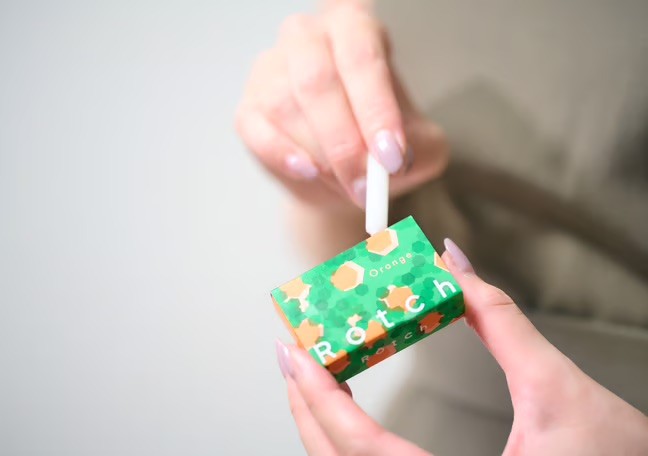
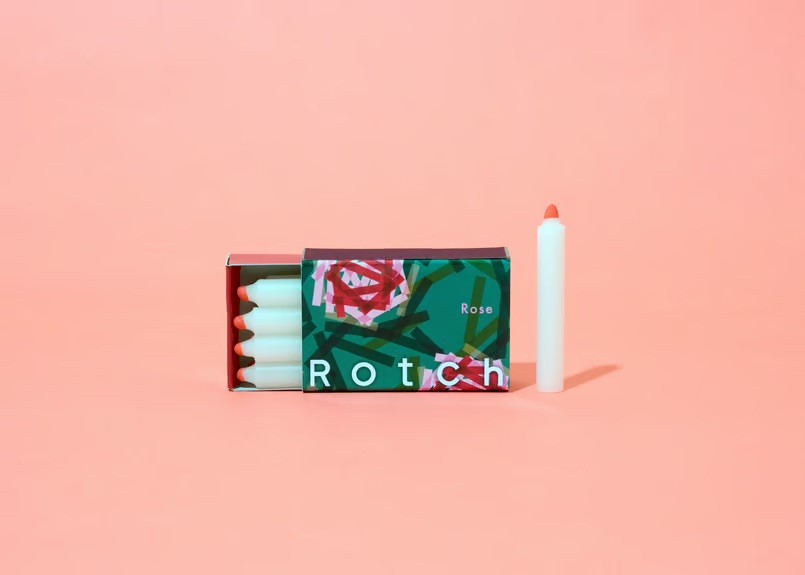
Rotch is an aromatherapy candle with an unexpected twist: it combines the candle with the match.
The idea began with Yūto Ogasawara's concept for "a new kind of light." Rikura Co., Ltd. later joined to handle product planning and development and bring the idea to market (sales are now handled by Sanwa Bussan Co., Ltd.).
Noda Buichi Shoten took on the manufacturing of the reclaimed wax at its core — giving new purpose to candles left over from weddings, funerals, and ceremonies that would otherwise have been thrown away, and shaping them into small candles you light the same way you'd strike a match, along the side of the box.
Each one burns for about 30 minutes.
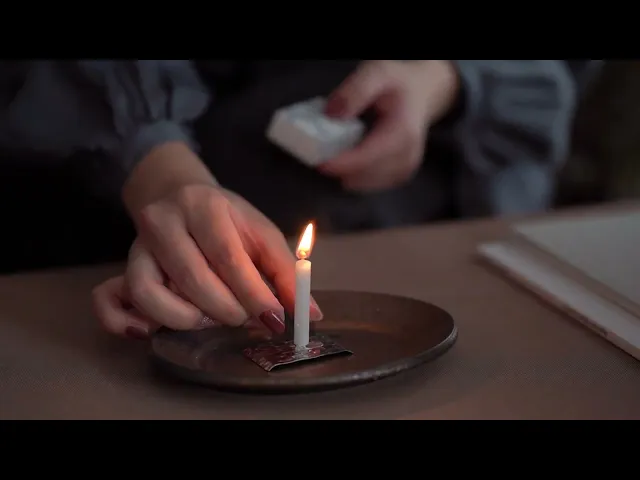
The sound of the strike, the moment the flame catches, a faint fragrance, the flicker of the light — with no tools to set up beforehand, the whole experience, starting from that first strike, becomes something to simply sit with and enjoy.
The idea behind it: carving out thirty minutes of stillness inside a busy day.
Rotch, and the new way of enjoying a candle it proposes, received a Good Design Award in 2022.
Candles that had finished their purpose. A new idea. And the skill Noda Buichi Shoten had built up over years of work. Where these three meet, a candle is reborn as an entirely different kind of light.
14,124 Lights, One Community
In November 2024, 14,124 candles were lit in Hasami’s Pottery Park.
The event was called Hasami Candle Night. Noda envisioned a candle night that could only happen in a town shaped by pottery — one created by the community itself.
In the months leading up to the event, Kakera Candle-making workshops were held from July through November, bringing together more than 100 participants.
Each person made two candles: one to take home, and one to donate to Candle Night.
Then, on the night of the event, participants returned with their candles, placed them alongside thousands of others, and lit them together.
Rather than simply coming to see a landscape someone else had created, each person became part of creating it.
Together, 14,124 lights illuminated Pottery Park.
What began with the simple act of giving used candles a second life had grown into something larger — a way to bring people together and transform the landscape of an entire town.
Light it once more.
In that small flame lives the spirit of mottainai — a belief in valuing what we already have — and Noda’s desire to bring people together through light.