But as fewer people wore kimono, tailoring work grew scarcer. Garment production moved overseas, and the fees paid to Japan’s wasai artisans continued to fall. In 2013, the Motoyama Wasai Academy — which had trained generations of craftspeople — closed its doors.
Skill alone was no longer enough to sustain a livelihood. Faced with that reality, Kodai stepped away from wasai for a time and began working in car sales. There, he learned something that would prove essential: making something exceptional isn’t enough on its own — its value has to reach people.
How do you spark someone’s interest? How do you communicate the story behind a product in a way that resonates?
To the craft of making, Kodai added the art of communicating.
Meanwhile, Seiya was working in Tokyo as a hairstylist, but he felt a growing sense of urgency as he watched his family’s craft fade away. When he learned that his brother had left wasai, he reached out with an idea: the two of them should create something new in kimono together.
What they wanted to preserve wasn’t simply the traditional form of the kimono. It was the skill and knowledge that wasai artisans had built over generations — reimagined to create something people today would genuinely want to wear.
If more people wore kimono, there would once again be more work for the people who make them.
With that conviction, the brothers founded call in 2019.


CALL set out to address the obstacles many people associate with kimono: they’re difficult to put on, prone to coming undone, expensive, high-maintenance, and hard to pair with Western clothing.
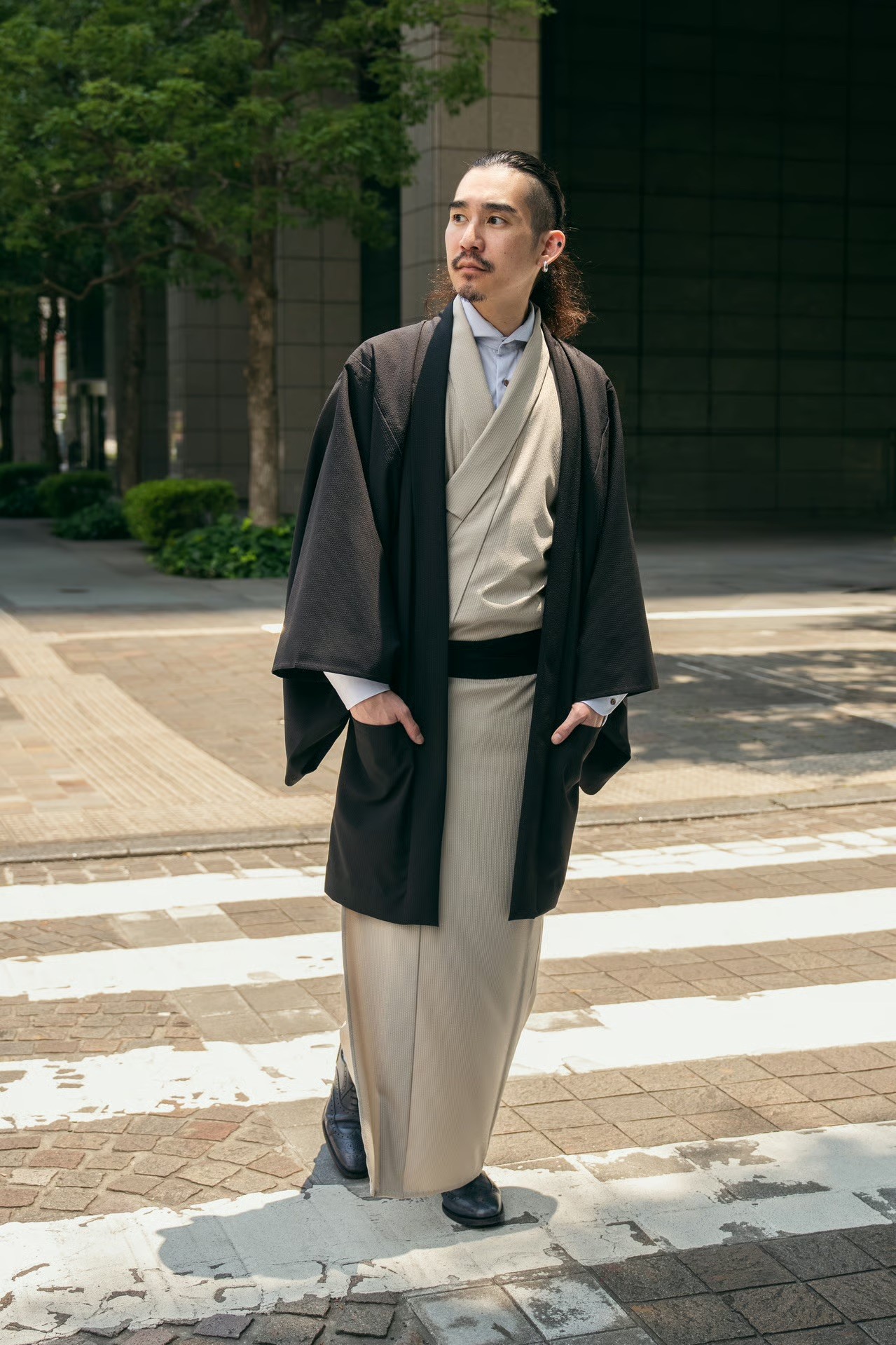
Working through each of these, one by one, over roughly a year of trial and error, the brothers arrived at a kimono that can be put on in about a minute and stays securely in place. A cord attached at the collar passes through an opening at the back and wraps around the body to secure it — no complex dressing technique required. You can put it on entirely on your own.
They also chose fabrics more commonly used for suits and shirts — washable at home, easy to store and care for, and naturally paired with turtlenecks, button-down shirts, sneakers, or leather shoes.
The result brings kimono closer to being simply another fashion choice, rather than something that demands specialized knowledge.
For all this focus on ease of wear, wasai remains at the heart of how every CALL kimono is made.
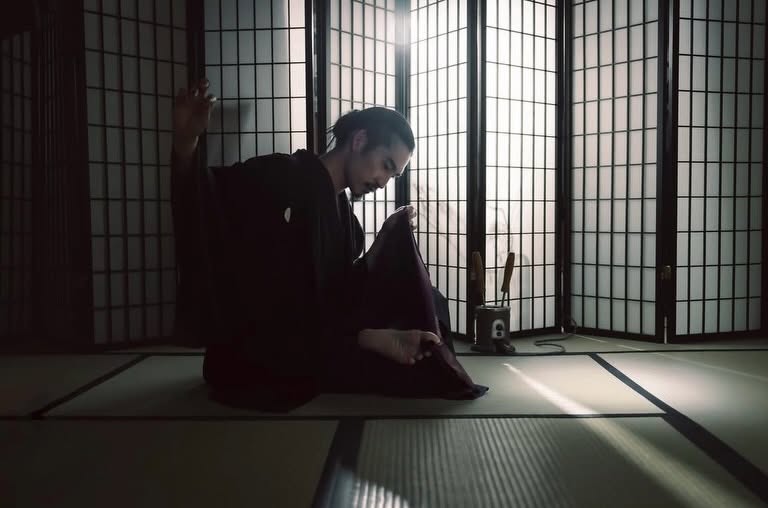
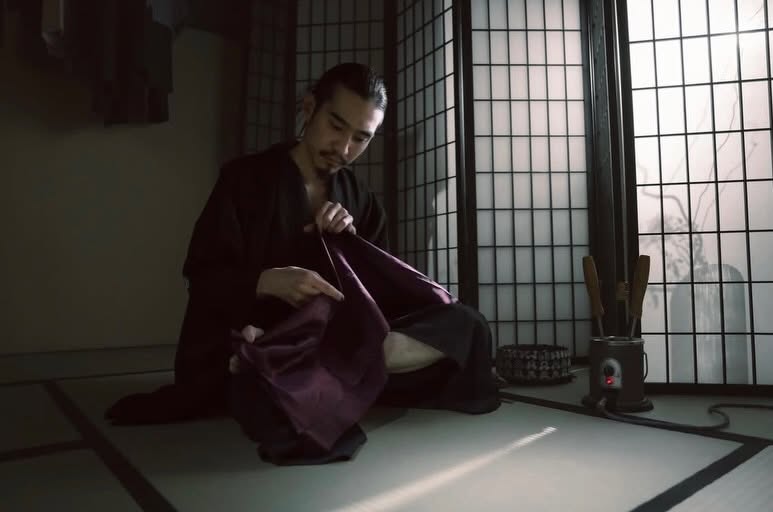
Each piece is tailored to the individual by a skilled wasai artisan in Japan. The bolt of fabric is carefully inspected, and any shrinkage or distortion is corrected. Cutting takes into account both the wearer’s measurements and the placement of the pattern.
Rather than using tailor’s chalk, artisans mark the fabric with a traditional tool called a hera, so as not to damage the cloth. The outer and lining fabrics are sewn together, the balance of the entire garment is checked, and its final shape is refined over the course of several days.
The craftsmanship that gives a kimono its comfort and beauty lies largely in the steps that disappear once the piece is finished.
Wasai is not simply the craft of sewing fabric together. It is the practice of reading the character of a material, imagining the person who will wear it and the moment they will wear it — and shaping all of that into a single garment.

CALL isn’t proposing a future where everyone wears kimono every day.
At a wedding or formal ceremony, choose a kimono instead of a suit. For a party or a presentation, wear one that expresses your individuality with elegance. On a day off, pair it with pieces already in your wardrobe and wear it around the city.
Even if you choose kimono only once a month — simply because that is the day you feel like wearing one — it has found a place in your life.
With this idea in mind, CALL offers three distinct lines: Reigi, its highest formal line; Hakuchaku, designed for gatherings and social occasions; and Ryuchaku, an everyday line made to be styled freely.
The goal isn’t to wear kimono for the sake of wearing kimono. It is to create a piece that fits the way you live and the places you go — something you can choose for the moments that feel a little more special.
That is CALL’s vision for kimono today.
The brothers don’t believe kimono should only be encountered in traditional settings.
You might discover one while dining at a restaurant.
You might encounter a robe tailored by a wasai artisan while relaxing at a sauna.
Or kimono might enter your world through something you already love — fashion, fragrance, leather goods, or design.
By bringing kimono into unexpected places, CALL is creating opportunities for people who might never have sought it out to encounter it naturally.
The idea is simple: you don’t have to be interested in kimono first to discover something you love about it.

The goal isn’t to preserve wasai as a technique of the past.
It is to create a future where wasai artisans can imagine new forms, design them, and tailor them with their own hands.
A future where young people can look at a wasai artisan and think, I want to do that — and where there are once again places for them to learn the craft.
The Motoyama brothers are reshaping kimono for the way people want to dress today, while building a future in which the skills behind it continue to be needed.
What CALL is tailoring is more than clothing. It is a new kimono culture — one that gives the wearer greater freedom, while allowing artisans to continue their craft with pride.
The kimono shown here are examples of finished pieces.
At CALL, you can choose your own fabric and have a kimono individually tailored for you.
Choosing the fabric — its color, pattern, texture, and character — is where your kimono begins. Watching that fabric gradually become a garment made specifically for you is part of the experience.
You don’t need to know exactly what you want before getting in touch. You can begin with a color or pattern you are drawn to, an occasion you have in mind, or simply an idea of how you would like to wear it.
CALL offers fabrics in a wide range of colors, patterns, textures, and materials. Explore them, see how they look and feel, and choose the one that feels right for you.
Every kimono begins with the fabric.