
Sechibaru Tea
Sechibaru, in Sasebo, Nagasaki, lies surrounded by mountains extending from Mount Kunimi. Come winter, snow blankets the tea fields, and by morning, deep mist settles over the mountains.
At an elevation of 350 to 450 meters, in a cool climate with sharp differences between day and night temperatures, spring’s new leaves take their time — growing more slowly than they would in warmer, lower-lying regions.
Harvest here can come a week to ten days later than in warmer tea-growing regions. And yet, there are people willing to wait for it.
That extra time produces thick, substantial leaves — and with them, a rich depth of umami and aroma.
That is the tea this mountain land of Sechibaru grows.


From One Tea Bush,
Three Generations
Maeda Seicha’s story began in 1952.
Sechibaru was once a coal-mining town. As the mines headed toward closure, the founder and his fellow villagers cleared the mountainside and began growing tea here instead.
Those tea fields passed to the second generation, and now to the third: Akihiro Maeda.
Maeda grew up visiting the tea fields with his grandparents from an early age, with tea-making a natural part of everyday life. For him, taking over the family’s fields felt less like a decision and more like the next step.
What’s been passed down across three generations isn’t just the fields themselves. It’s also the work and skill it takes to keep making tea that could only come from this particular land — carried forward, generation after generation.
Grown, Made, and Sold
— All in One Place
From cultivation to processing, finishing, and sales — Maeda Seicha handles every step itself.
From the single leaf grown in the field to the cup that reaches the customer’s hands, taking full responsibility for every stage along the way — that’s how Maeda Seicha works.
And because they handle sales themselves, they get to see the faces — and hear the voices — of the people actually drinking their tea.
“That was delicious.”
“Once you’ve had tea from here, you can’t go back to any other.”
Words like these feed directly back into the next year’s tea.


Fragrance and Umami,
Born from the Soil
Underneath it all is soil care that has continued across three generations.
Even in winter, when the tea bushes lie dormant, the work in the fields never stops. Since the founder’s time, the family has nourished the soil with organic fertilizer and compost, and laid finely chopped kaya grasses such as susuki over the fields as mulch — a practice called shikigusa.
Long before any new leaf is visible, preparation for the next cup has already begun.
Then spring arrives. In Sechibaru, where temperatures swing widely between day and night, new leaves take their time, growing unhurried. Slowly grown, thick leaves are what give this land’s tea its distinctive umami and aroma.
What Maeda Seicha cares about most is drawing out a tea leaf’s natural character with as little interference as possible.
While many teas today rely on deep steaming, Maeda Seicha has kept to light steaming since Akihiro Maeda’s grandfather’s generation.
Rather than chasing a vivid green color, they preserve the aroma that Sechibaru’s leaves naturally carry — steaming for a shorter time and finishing with a lighter roast to bring out the fresh fragrance of young leaves.
What Maeda Seicha makes is mushisei tamaryokucha — a style of steamed green tea passed down through western Kyushu. Because it skips the final step of rolling the leaves into needle-like strands, as is done for standard sencha, the finished leaves retain a gently curled shape.
In hot water, the leaves unfurl slowly, giving a mellow flavor that carries through a second and even third steeping.
Aroma over appearance.
That philosophy is at the heart of the tea-making Maeda Seicha has protected for three generations.


Three Generations of Craft
The quality of Maeda Seicha’s tea has been recognized for decades. It has received the Minister of Agriculture, Forestry and Fisheries Award twice at the National Tea Competition — in 1991 and 2005 — and won the Emperor’s Cup in 1997, along with numerous other honors at competitions across Kyushu and Nagasaki Prefecture.
None of this came from favorable conditions alone.
Walking the fields every day. Reading the condition of the leaves. Judging the right moment to harvest. Adjusting the process each year to match that season’s leaves.
Every one of these small decisions, repeated across three generations, is what supports each cup.
Passing the Teapot
to the Next Generation
Maeda Seicha’s focus isn’t only on traditional tea-making.
They’ve also been exploring new possibilities for Sechibaru tea — Japanese-style black tea, tea blended specifically for beer cocktails, and product development in partnership with food companies.
But the wish behind it all hasn’t changed.
If a new flavor or product is what first brings someone to Sechibaru tea, they hope it leads, eventually, to a teapot — steeped slowly, so the tea’s true flavor and aroma can be enjoyed as they were meant to be.
Boiling the water. Adding the leaves to the pot. Waiting for the tea to steep.
That waiting, too, is part of the pleasure of tea.
Leaves grown slowly on a snow-covered mountain. Soil and craft refined across three generations.
In every cup of Maeda Seicha tea, you’ll find both the nature of Sechibaru and the story of a family that has kept this land’s fragrance alive.

Maeda Seicha Collection
Mine no Tsuyu — New Harvest Tea

Japanese Black Tea (Tea Bags)

Aracha — Minimally Processed Green Tea

Genmaicha with Matcha (Tea Bags)

Powdered Green Tea

Tea Bags for Hot & Cold Brew

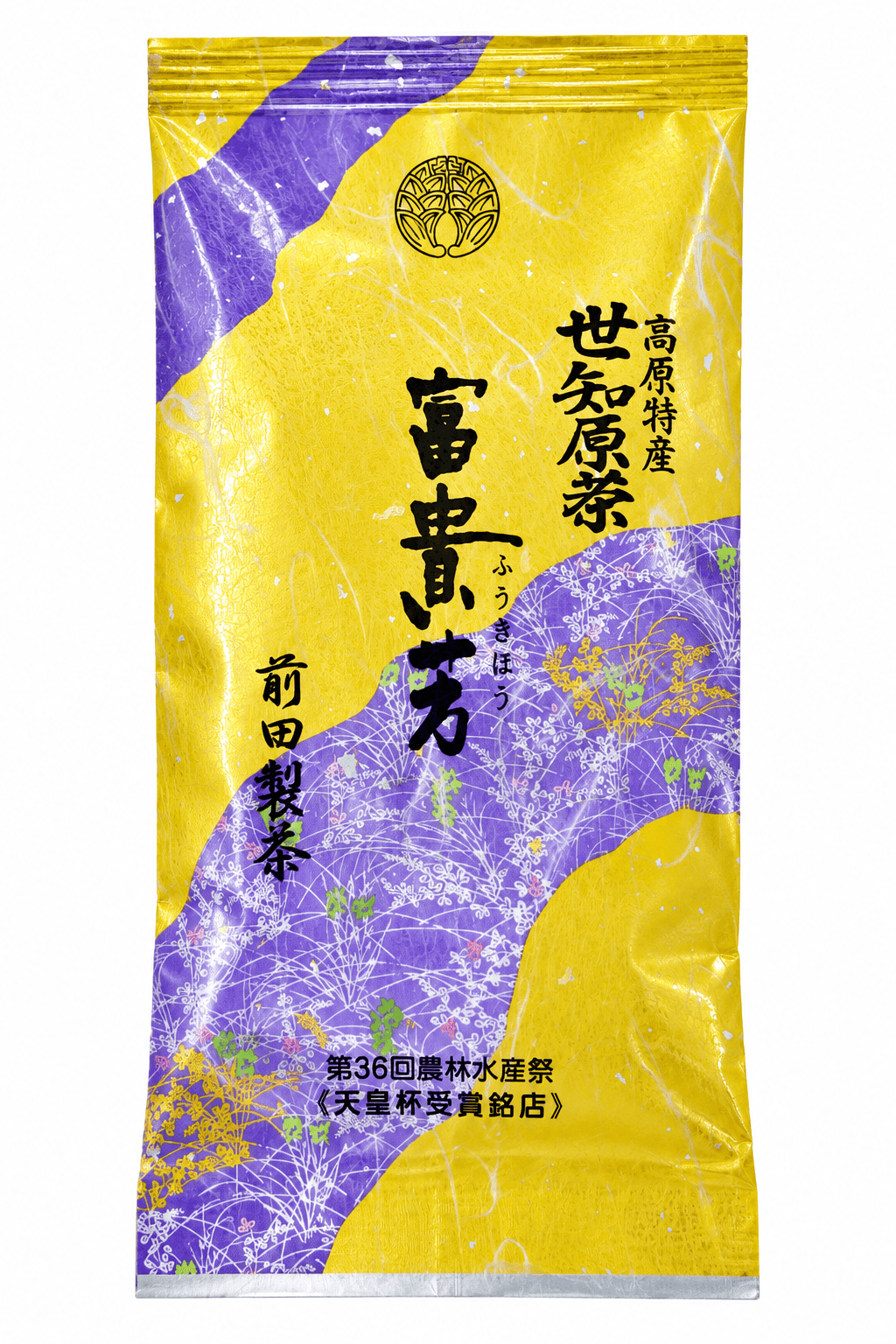
Fukiyoshi — New Harvest Tea
Premium New Harvest Tea Gift Set

Premium Shiraore Tea
