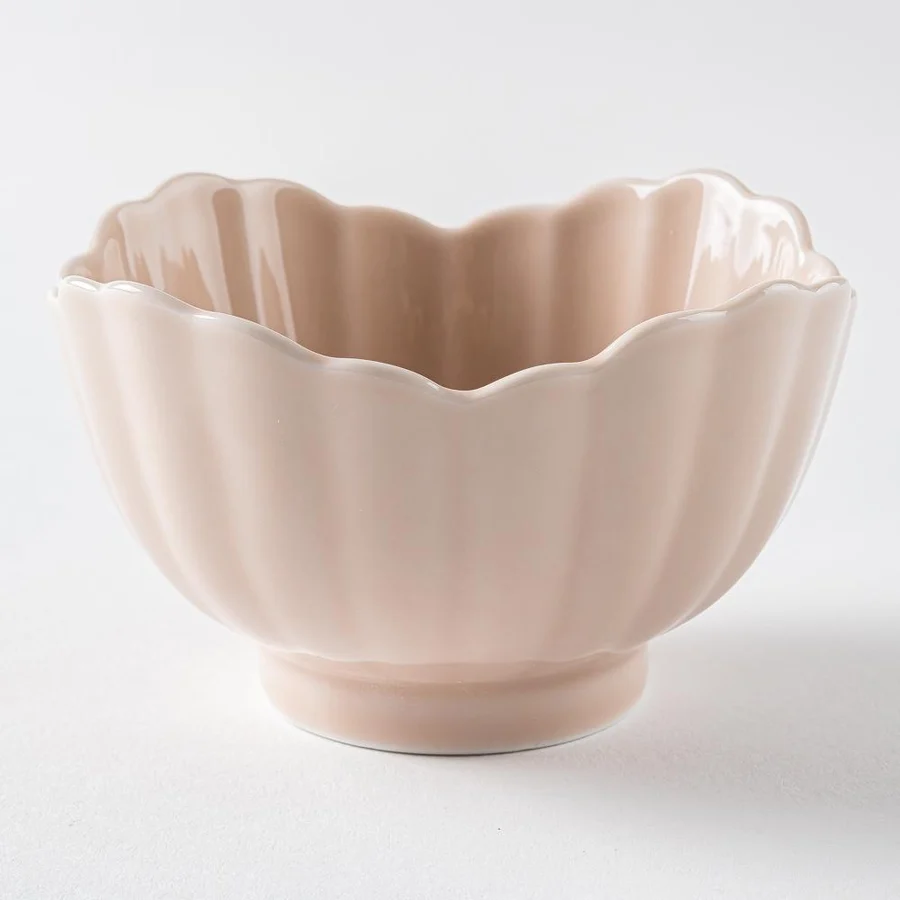
Hasami Ware
Porcelain Made for Everyday Life
Vessels Shaped by Everyday Life
For over 400 years, Hasami ware has evolved alongside everyday life.
Not made for special occasions, but for the table you sit down to every day — that’s the heart of Hasami ware. Practical, adaptable, and always shaped around how people actually live.
Each generation layers its own sensibility onto techniques passed down from the last. The result is tableware that still feels at home on our tables today, becoming part of the rituals and moments that make up daily life.


Hasami Ware
The story of Hasami ware began around 400 years ago, in what is now Hasami, Nagasaki Prefecture.
At a time when porcelain was still reserved for gifts and special occasions, Hasami turned its attention elsewhere: ordinary life. Sturdy, easy to use, and affordable, the kurawanka bowl brought porcelain — once a luxury — into daily use, and in doing so helped shape Japan’s food culture.
Hasami’s vessels traveled far beyond Japan, too. Kompra bottles, filled with sake and soy sauce and shipped abroad from Dejima in Nagasaki, made their way to Europe and beyond, connecting Hasami with the wider world.
The beauty of white porcelain. The deep blue of sometsuke. And a willingness to let the vessel itself change as life changes.
That spirit — making vessels for daily life — is still at the heart of Hasami craftsmanship 400 years on.
Tanshin Kiln:
Light Held Within White Porcelain
Tanshin Kiln was founded in 1978 in Hasami, Nagasaki.
At the heart of its work is a technique found nowhere else: Suisho-bori (水晶彫), or “crystal carving” — a way of holding clear, colorless light within white porcelain.
It began with a challenge taken on by the kiln’s founder, Yuzuru Nagasaki. At the time, the translucent sections of hotaru-de porcelain typically had a cloudy, milky appearance. Nagasaki saw another possibility. Through years of experimentation, he developed a method that produced a clarity resembling crystal.
He called it Suisho-bori — 水晶彫.
The process begins while the porcelain body is still unfired. An artisan carves tiny openings into the soft porcelain by hand, one by one. After the first firing, each opening is painstakingly filled by hand with a specially formulated material before the piece returns to the kiln.
That formula — the secret behind the clear, glowing sections — has been passed down from the founder and is now held by Tadayoshi Nagasaki, the kiln’s second-generation head. It lies at the very heart of Tanshin’s craft.
The openings must be carved while the porcelain is still soft enough to hold a fingerprint. Too dry, and it cracks. Too soft, and it loses its shape. The artisan works by feel — sensing the day’s temperature and humidity, even draping damp cloths over the pieces in summer to slow the drying — maintaining that delicate balance throughout the process.
There are no sketches to follow.
Taking in the shape of the vessel and the pattern as a whole, the artisan relies on hand, eye, and experience to carve each opening one at a time.
It is about as far from efficient as a process can be.
But that is precisely why Tanshin continues to protect it. A technique this difficult to replicate is not simply part of the process — it is part of the kiln’s identity.


Carrying That Light Into Today
Tanshin-gama Collection


Eisen: Vessels That Enrich Everyday Life
In Hasami, Nagasaki — a town that has spent more than 400 years making porcelain for everyday life — Eisen began its own story in 1935 with vessels for serving sake.
As the way people live has changed, Eisen has evolved with it, expanding from sake ware into tableware for the everyday home.
Drawing on techniques long practiced in Hasami — hand painting, icchin slip decoration, copperplate transfer printing, and hotaru-de — Eisen continues to work with traditional designs while exploring new colors, forms, and ideas for contemporary life.
At the heart of Eisen’s philosophy is something simple:
Good tableware should be easy to live with.
Something you naturally reach for every day. Something that makes food look inviting. Something that makes the experience of eating just a little more enjoyable.
Not tableware reserved for special occasions, but pieces that become familiar through use — and remain part of a home for years.
The way people live may change.
Eisen’s commitment to making tableware for those lives does not.


Turning Small Frustrations
Into Ideas
There’s another quality that defines Eisen’s approach to making: turning small, everyday frustrations into new ideas for tableware.
A soy sauce pourer, loved for more than 40 years, designed not to drip.
The Manten plate — a resting place for a ladle while cooking that doubles as a dish for tasting.
A bread plate designed to let excess steam and oil escape from toast and fried foods.
And porcelain switch plates that take the craft beyond the table altogether.
“Wouldn’t this be easier if…”
That kind of small, everyday observation is where many of Eisen’s ideas begin.
But the thinking doesn’t stop with the shape.
Eisen listens closely to the people who actually use its products — considering the right size and weight, and even how a piece works with different foods. When customers overseas pointed out that their ladles were too large for the Manten plate, even that became inspiration for what might come next.
The tableware itself is never meant to be the star. It is there to bring out the best in the food and make the table a more enjoyable place to be.
Eisen preserves traditional skills while continuing to observe how people live, always looking for new ways to make everyday objects work better.
What Eisen creates is not tableware made simply to be admired, but tableware whose value comes to life through use.